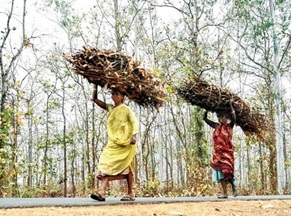
Fuel Collection Burden
Women walk miles daily to collect fuel instead of spending time on education, livelihood, or family wellbeing.
A simple yet transformative innovation developed by PRISM to reduce smoke, protect women health, save fuel, and create climate-smart rural kitchens.
For millions of rural women, the day begins long before sunrise. They walk miles to collect firewood—often carrying heavy loads on their backs. This unpaid labor is essential for survival, yet it exposes women and adolescent girls to exhaustion, lost opportunities, and risks to their safety. Fuel collection is not a choice. It is a responsibility passed down through generations. Hours every week are spent collecting fuel instead of earning, resting, or learning.
Women walk miles daily to collect fuel instead of spending time on education, livelihood, or family wellbeing.
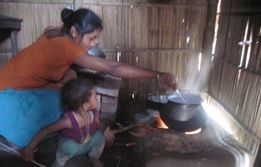
Cooking should nourish families, but for many it silently harms them. Meals are prepared over open fires or traditional clay stoves using wood, dung, or crop residues. Thick smoke fills kitchens and living spaces, burning eyes, lungs, and skin. Women and young children breathe this smoke for hours every day. Over time, it leads to chronic cough, respiratory disease, eye damage, pregnancy complications, and premature death. Smoke exposure can equal smoking multiple cigarettes daily.
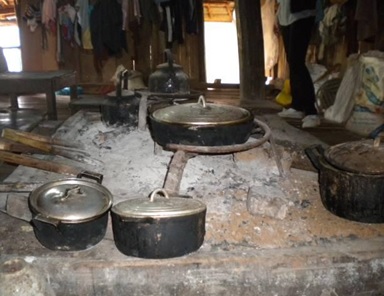
Indoor air pollution leaves its mark everywhere—on walls, utensils, ceilings, and bodies. What cannot be seen is even more dangerous: fine particles and black carbon that lodge deep in the lungs. This same black carbon escapes into the atmosphere, accelerating climate change and harming ecosystems far beyond the kitchen. Fine particulate pollution from traditional stoves can be 10–20 times higher than safe air quality limits..
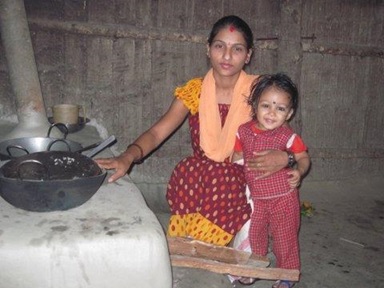
PRISM began not with technology, but with listening. Women spoke about smoke, discomfort, fuel shortages, health problems, and lost time. They did not ask for charity. They asked for dignity, safety, and solutions that respected their realities. Traditional knowledge, cultural practices, affordability, and safety shaped every innovation design decision.
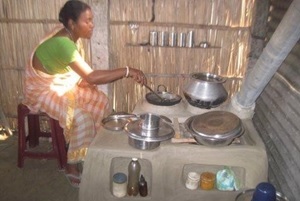
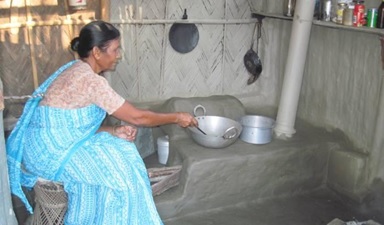
From these conversations emerged the Bahari Chullah—a multipurpose oven built from locally available materials. It uses familiar fuels but burns them more efficiently and safely. The design is simple, adaptable, and community-owned without expensive imports or dependency.
With the Bahari Chullah, smoke no longer fills the room. Cooking becomes faster and more comfortable. Women can cook multiple dishes at once, collect hot water during cooking, and keep food warm without reheating. The kitchen becomes a safer, cleaner space—free from soot, excessive heat, and constant discomfort. Improved cookstoves like the Bahari Chullah can reduce indoor smoke 100% and cut fuel use significantly.
Less fuel means fewer trips to the forest. Less smoke means fewer illnesses. Women save time, energy, and money—resources they can invest in their families, livelihoods, and themselves. Children breathe cleaner air. Families spend less on healthcare. Small changes create lasting impact. Lower fuel costs. Fewer medical expenses. Saving women hours every week More time for life beyond cooking.
By reducing fuel use and improving combustion efficiency, the Bahari Chullah lowers emissions of black carbon and particulate matter. Forest pressure eases. Local ecosystems recover. Cleaner cooking means lower emissions and reduced pressure on forests. Climate action begins at home—one kitchen at a time.
Ambika Kairala, a young farmer from Purba Khairbari, West Bengal, once cooked in thick smoke like most women in her village. Today, her kitchen tells a different story. She cooks in comfort and safely. Her family’s health has improved. Household expenses have reduced. For Ambika, the Bahari Chullah is not just a stove—it is dignity.
Why This Story Matters Clean cooking is not a luxury. It is a matter of health, gender justice, and climate resilience.
Each Bahari Chullah represents:
Support PRISM in scaling climate-smart cooking solutions for vulnerable rural communities.