Expressed and Unspoken Needs
Addressing both expressed and unspoken needs of vulnerable communities, particularly women and children .
PRISM partners with vulnerable communities at the margins to advance livelihoods, nutrition, gender equality, and women’s leadership, while strengthening institution building and fostering climate‑resilient, environmentally sustainable futures across India and beyond.
Professional Institute for Development and Socio-Environmental Management (PRISM), established in 2000 and registered under the Societies Registration Act, Government of West Bengal, builds on a legacy that began in 1967 with the founding of Yuba Bijnan Sanstha—a grassroots science movement led by local youth in Gobardanga.
Rooted in a strong culture of volunteerism and scientific inquiry, the early initiative focused on making science accessible to communities through innovative learning tools and locally adaptable technologies. Over time, this evolved into the development of rural, green innovations such as solar cookers and driers, biogas plants, village refrigeration systems, and other solutions grounded in indigenous knowledge and local resources.
As the scope expanded to include health, nutrition, agriculture, natural resource management, and environmental sustainability, PRISM emerged as a professional institution to scale impact. Today, it integrates scientific knowledge, community participation, and field-based implementation to design sustainable, people-centered development solutions.
PRISM places communities at the core of its approach—promoting locally driven solutions, co-investment, and shared ownership. This model strengthens civic participation, builds local constituencies, and enhances accountability, ensuring long-term sustainability.
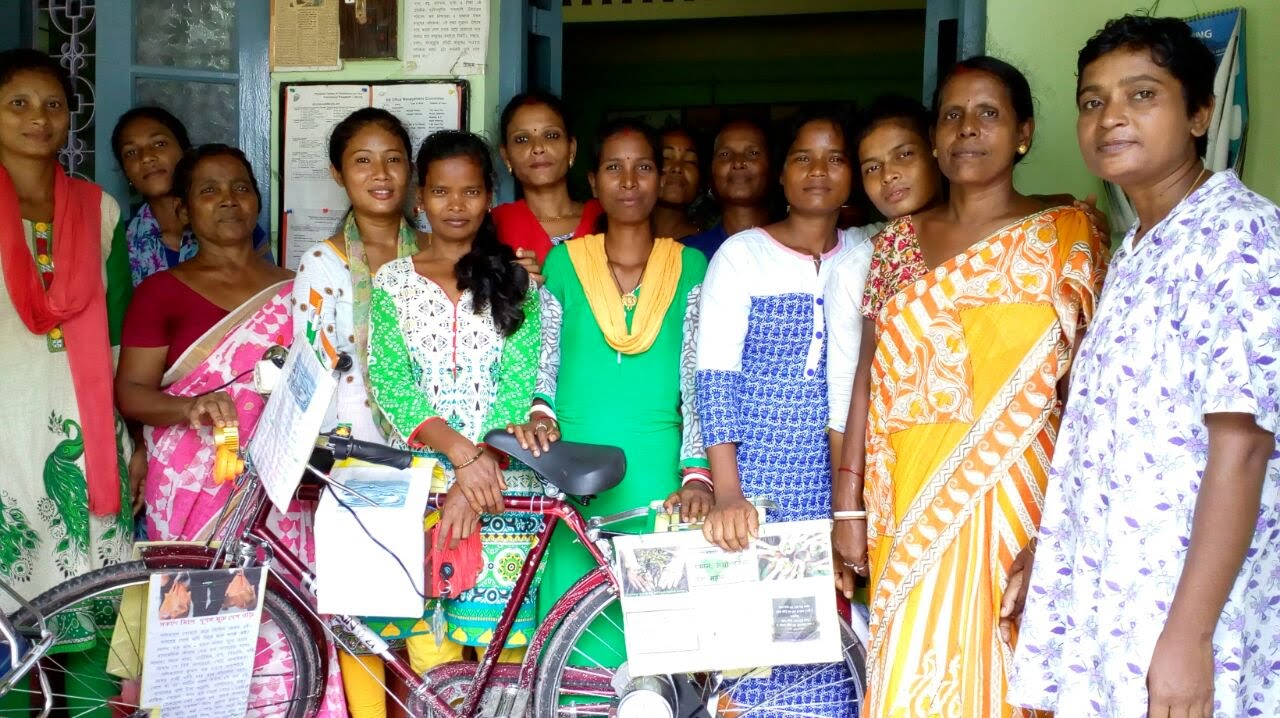
A key pillar of PRISM’s work is women’s leadership and institution building. It has nurtured the Barnali Pello Jukkhi Foundation (BPJF), a collective of women from diverse and marginalized backgrounds, including first-generation learners. These women now lead environmentally sustainable enterprises and community initiatives, demonstrating the power of locally anchored leadership.
Alongside women’s leadership, PRISM nurtures the next generation through its Green Scouts program — engaging children in cultivating scientific inquiry, responsibility, and leadership in environmental stewardship, and community service.
To create resilient, self-reliant communities where science, indigenous knowledge, and collective leadership build sustainable futures with dignity and equity.
To co-create integrated local solutions that balance food, shelter, income, and environmental sustainability for generations to come.
Addressing both expressed and unspoken needs of vulnerable communities, particularly women and children .
Designing and implementing integrated development programs for marginalized populations .
Promoting community awareness and participation in social and environmental change .
Strengthening local institutions and capacities for long-term resilience .
Advancing a just, equitable, and inclusive society through multi-sectoral approaches .
From renewable energy to women’s enterprises and children’s Green Scouts, PRISM’s innovations weave together science, equity, and community leadership to build resilient futures. PRISM has developed and scaled a wide range of affordable, climate-smart, and community-driven innovations — empowering women, children, and communities through leadership, learning, and sustainable solutions.